
Non-anthropogenic matter – personal research on architecture for livestock
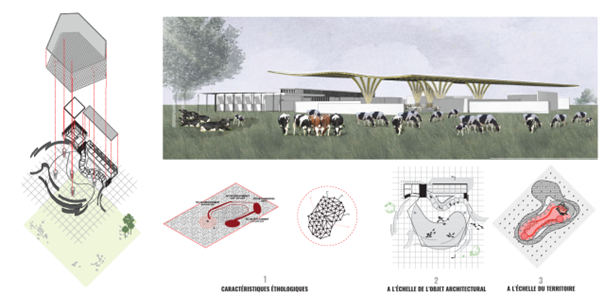
Matter is usually thought from a human point of view. Object of sensitive experience, in the architectural project it is naturally translated in relation to our senses. It is then used and modelled, in order to conform to our uses and modes of investing built space. In this sense, it can be assumed that our way of perceiving it is the only way. But what would matter be from an innovative point of view such as that of the animal? The architectural project, from the design phase to the construction phase – which is the alliance of form and matter – could be profoundly impacted, as well as the different territories and spaces we share. This theoretical and projectual reflection would bring a new look at the variety of relationships we have with them, and integrate this current evolution of Animal Consideration.
Now a major contemporary issue, this new societal change leads us to pursue more intensively the research avenues previously invested in it. The immemorial nature of man and animal implies reconsidering the ethical and moral duties of this bond, and refining our responsibilities towards them. The more we discover about the complexity of their being and their own worlds, the more it is necessary to question the relevance of the spaces we offer them. As a result of recent scientific discoveries on this complex animal subject, we are increasingly able to assert that the spaces – artefactual – in which most animals under our direct responsibility (domestic, captive) evolve are not as legitimate as we claim.
In order for these recent ethological discoveries to be taken into account, moral reflections about the relations we have with them must seek to materialize and extract from an anthropocentric vision. The human being, very often considered to be a measure of everything, is no longer the only reference. When we assimilate that the animal is, like us, in continuous interaction with its environment, according to the characteristics related to its species, and that what it perceives is neither neutral nor banal, we cannot continue to impose on them such a radical decrease in the worlds in which they evolve when they are subject to our authority. What can the animal condition expect from architecture? How far can the act of conceiving go in understanding animal worlds? What we know today, we didn't know a few years ago. How do animals perceive what surrounds them and, above all, how do they take them into account in the architectural project? How could the architectural project become the material representation of an unknown world?
The aim is to go beyond the notion of « welfare » animal, which is no longer sufficient to meet the complex criteria of animals when it comes to built spaces. The only human-animal relationship is not enough to be developed, it is the tripartite human-animal-environment relationship that needs to be deepened.
This is the meaning of the word « material » as we usually approach which is questioned. It is a question of the materiality of architectural productions for animals, so that they also become legible and comprehensible from their point of view.
Mégane Klein – Article written in 2017 for PLI magazine (article not accepted)
